A toilet that keeps hissing—or suddenly refills when nobody has flushed—needs attention. Start by finding where the water is going. Replacing every part in the tank can cost more and still miss the cause.
The quick answer
| Runs without stopping | Look for tank water spilling into the overflow tube. |
|---|---|
| Refills on its own | Check whether water is slowly escaping from the tank into the bowl. |
| Stops after a handle jiggle | Check for a sticking handle or a chain holding the flush seal open. |
| Water on the floor | Stop using the toilet and check for an outside leak. |
🔎 Before you buy a replacement part
These checks are for common gravity-fed toilets with accessible tank parts. If yours has a sealed pressure-assist tank or electronic controls, use its own service instructions.
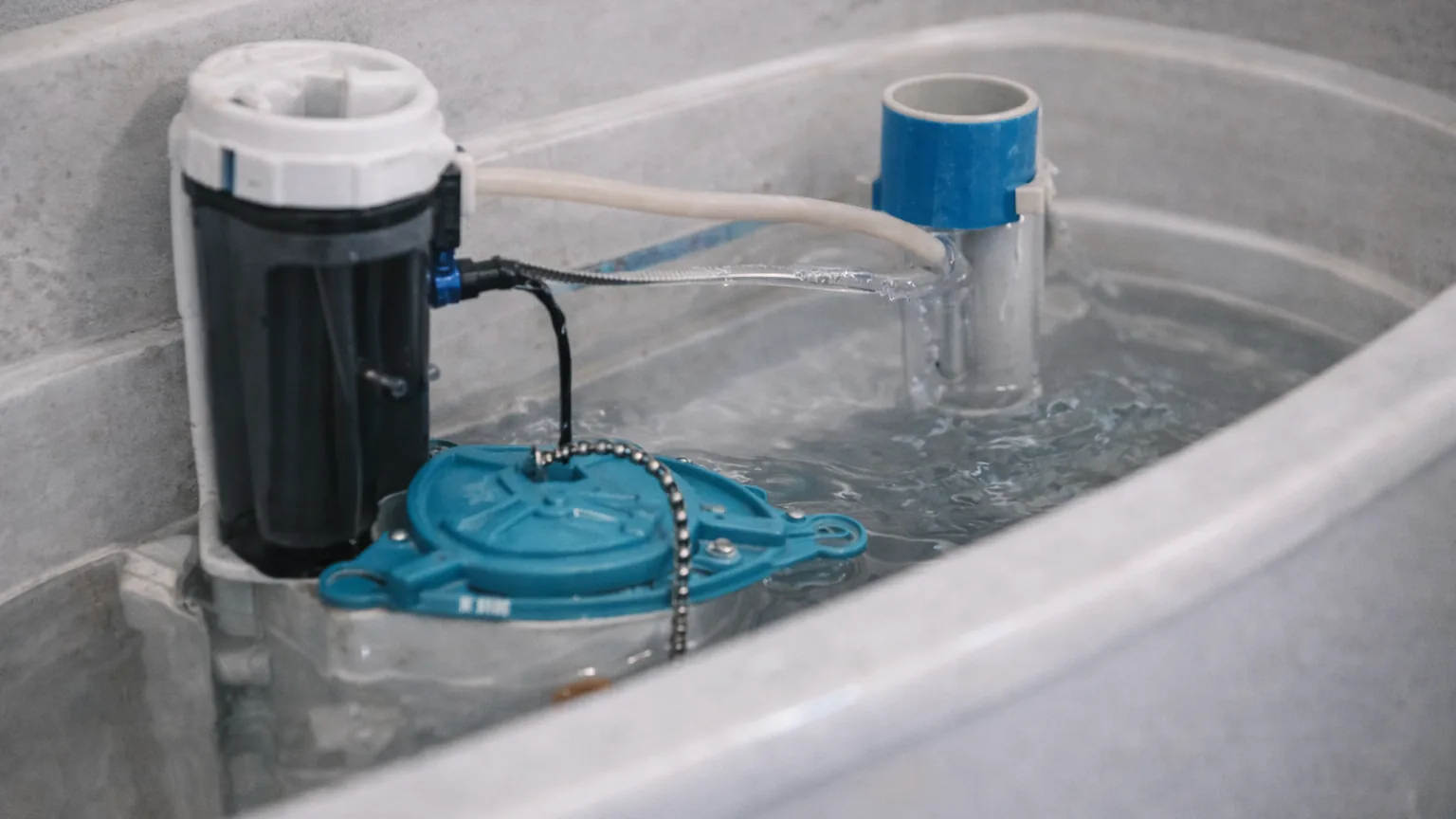
Lift the lid carefully and set it on a flat, protected surface. Take a photo and note the toilet model number. Inside a typical tank, the fill valve brings water in; the flapper or flush-valve seal holds it until a flush.
You can observe a refill with the water on. Before removing parts or opening a valve, shut off the toilet's supply and follow the exact instructions. If the shutoff sticks or leaks, stop instead of forcing it.
See Fluidmaster's fill-valve guidance (opens in a new tab) and the 400A instructions (PDF) (opens in a new tab) for that specific valve.
Watch what happens after a flush
A short refill is normal. What matters is whether it stops and stays stopped.
- Water keeps entering the overflow: the fill level may be wrong, or the fill valve may not be shutting off.
- The handle does not return freely: a binding lever or caught chain may prevent the flapper from closing.
- The tank fills, goes quiet, then starts again: check for water escaping past the flush seal before blaming the fill valve.
Use the tank's marked fill level and the manufacturer's instructions. Do not raise the level to hide another problem. Kohler's running-toilet guide (opens in a new tab) explains the common handle, fill-valve, and overflow checks.
💧 Try a simple dye test
- Let the tank finish filling.
- Add a few drops of food coloring or a toilet leak-detection tablet to the tank.
- Wait 10 minutes without flushing.
- Look for color in the bowl, then flush promptly to help avoid staining.
Color reaching the bowl shows tank water is getting through. The EPA's toilet maintenance guidance (opens in a new tab) describes this check. Use it as a clue, together with what you saw inside the tank.
Match the fix to your toilet
A flapper, canister seal, and fill valve do different jobs. Match replacement parts to the toilet and valve model rather than assuming every “universal” kit fits.
Also check the small refill hose. On some toilets, an incorrectly positioned hose can siphon water from the tank and cause repeat refills. Kohler shows why hose placement differs between flapper and canister models (opens in a new tab). Follow your model's arrangement; do not push a loose hose deep into the overflow tube.
After a repair, check both the flush and refill, then watch for another unexplained refill. Look around any connections you handled for drips.
When to call a plumber
Get help if the toilet keeps running after the simple checks, the shutoff will not operate safely, you see cracked porcelain, or water is escaping onto the floor. An external leak needs a different diagnosis from a tank leaking quietly into the bowl.
If water is spreading, close the toilet's supply only if you can do so safely. If that does not stop it, use the home's shutoff if you know where it is and can reach it safely. Keep people away from water near electrical equipment.
For unexplained water use elsewhere, read our hidden water leak guide.
Common questions
Does a running toilet mean I need a new toilet?
Not necessarily. Identify the failing part first. The toilet's condition, compatible parts, and repair scope help determine whether a repair or replacement makes more sense.
Why does jiggling the handle help?
It can let the flush mechanism settle back into place. Repeated jiggling is a clue to check the handle, chain, and seal—not a lasting repair.
Could this explain a higher water bill?
It can contribute, even without a puddle. Compare actual water use, not just the bill total. San Antonio customers can use SAWS meter-reading guidance (opens in a new tab). If your whole home also has weak flow, start with our low water pressure checks.