A higher water bill or damp spot deserves a closer look. It does not automatically mean a broken pipe under your house. Start with a few simple checks before guessing where the problem is.
The quick answer
Start here: Look for visible water, compare your water use, and check the meter during a quiet period. A clue can help you decide what to do next; it cannot tell you exactly which pipe needs repair.
🔎 Clues worth checking
- Higher water use: Compare gallons used, not just the bill total. Extra guests, more watering, or a longer billing period can change the result.
- Unexpected water sounds: Listen for a toilet refilling or running water when nobody is using a fixture.
- Dampness: Look for new stains, peeling finishes, wet cabinets, or a musty smell.
- A wet yard: Notice soggy areas that remain after nearby ground dries.
Moisture can come from plumbing, rain entry, or condensation. A stain alone does not prove a supply-pipe leak. CDC's moisture guidance (opens in a new tab) explains why fixing the source matters.
Try a two-hour meter check
EPA recommends comparing meter readings across two hours without water use. (opens in a new tab)
- Choose a period when nobody needs water. Finish laundry and dishwasher cycles first.
- Account for automatic use: irrigation, an icemaker, a softener's cleaning cycle, and a reverse-osmosis tank refilling. Follow equipment instructions; do not unplug or close unfamiliar equipment.
- If the meter is safely accessible, photograph its reading and note the time. Keep water use off for two hours, then compare.
If the reading increases: Water passed through the meter. First rule out automatic use. Unexplained use needs investigation, but the reading does not locate the leak.
If it stays still: No change was detected during that window. That does not rule out an intermittent leak, a drain leak, or rain entering the house.
Check what you can see
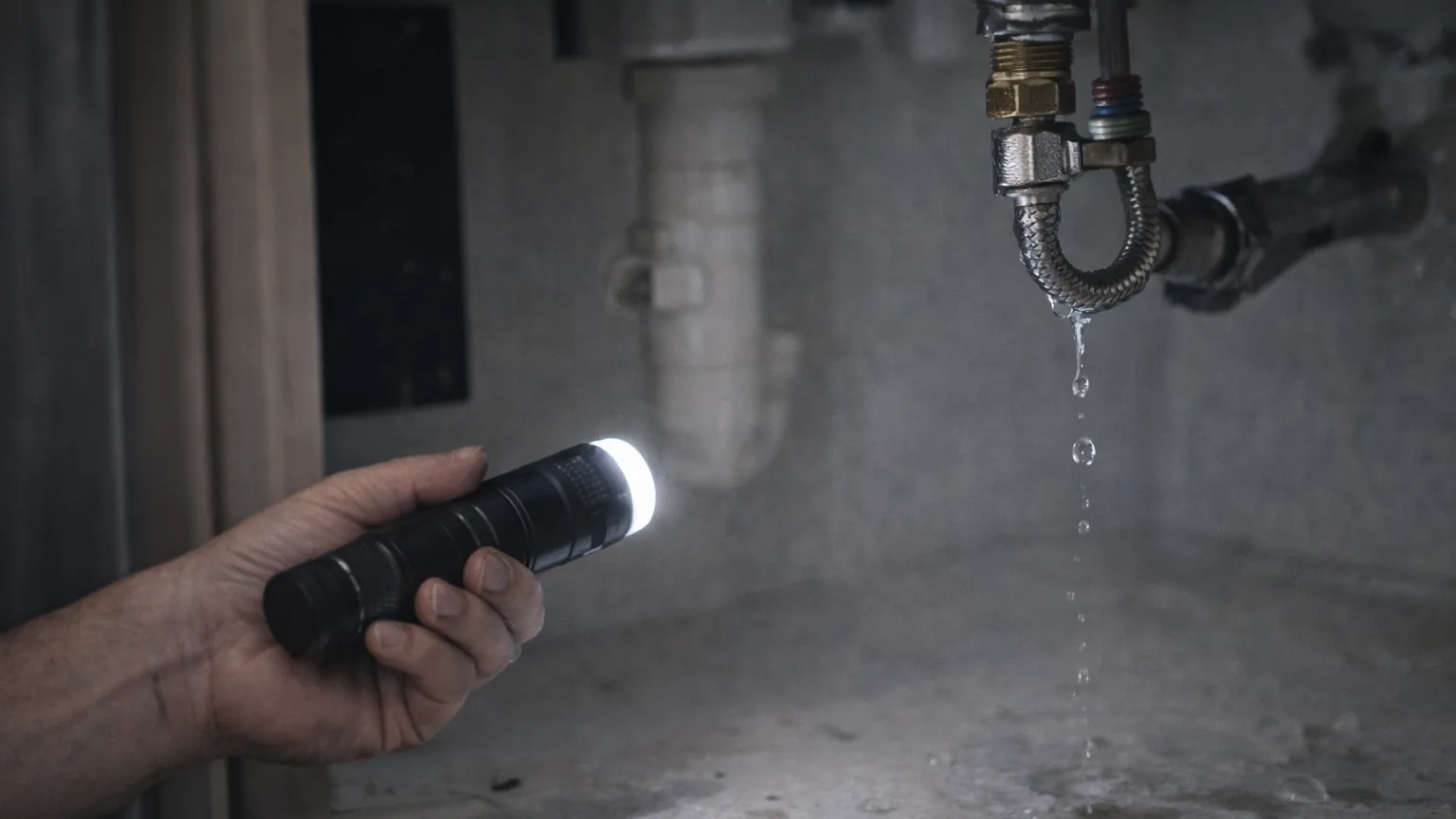
Use a flashlight to look under sinks, around toilet bases, at exposed supply connections, and around the water heater. Check nearby floors without pulling heavy appliances or touching electrical parts.
Take photos and note whether moisture appears after rain, a shower, laundry, or irrigation. Do not cut walls, dig, or start replacing pipes based on one clue.
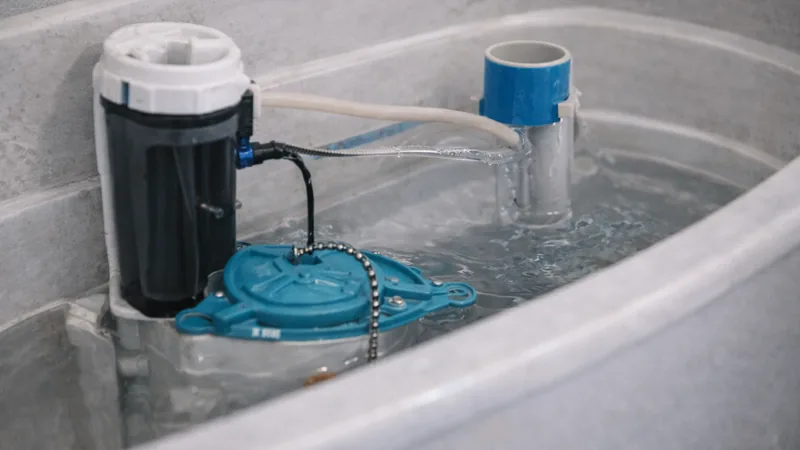
A toilet that quietly refills may explain unexpected use. Start with our running-toilet guide. For weak flow, use our low-water-pressure checks; pressure alone does not identify a leak.
💧 If water is actively escaping
Skip the meter test. If you can safely reach a familiar, working fixture valve, close it. For a larger leak, use your home's main shutoff if you know its location and can reach it safely. Never force a stuck valve.
Your customer shutoff and the utility-owned meter are different parts. Austin Water's diagram shows the distinction. (opens in a new tab) Do not tamper with meter hardware. If you cannot identify the right valve, contact your provider or a qualified plumber.
Stay away from water near electrical equipment and from sagging ceilings. Keep people out of the affected area.
Use your local water records
SAWS explains how ConnectH2O customers can review hourly use (opens in a new tab) and receive possible-leak alerts. Austin Water customers can use the My ATX Water portal (opens in a new tab). Alerts help spot patterns; they do not find the damaged pipe.
For water coming from a street, hydrant, or meter area, use SAWS's reporting options (opens in a new tab) or Austin Water's leak-reporting page (opens in a new tab). If another provider serves your address, contact that provider.
Common questions
Can a leak happen without a higher bill?
Yes. A drain leak or roof leak may cause dampness without extra metered water use.
Does a moving meter prove a slab leak?
No. It shows water use. Toilets, irrigation, automatic equipment, and other supply leaks must be considered before naming the source.
What should I record before asking for help?
Your readings and times, recent usage history, photos, and when the problem occurs. Do not delay acting on active water damage to collect records.
Explore more practical guides in Home Tips.